Case · my own product
You define a field and the form is already there
Every company that hires me asks for the same system with a different form: different fields, different rules, a different screen. KUIDY-CORE is what I wrote to stop coding that form over and over: you define the modules and their fields from the interface, and a generic engine draws the screen, validates what you type and saves it.
What it looks like
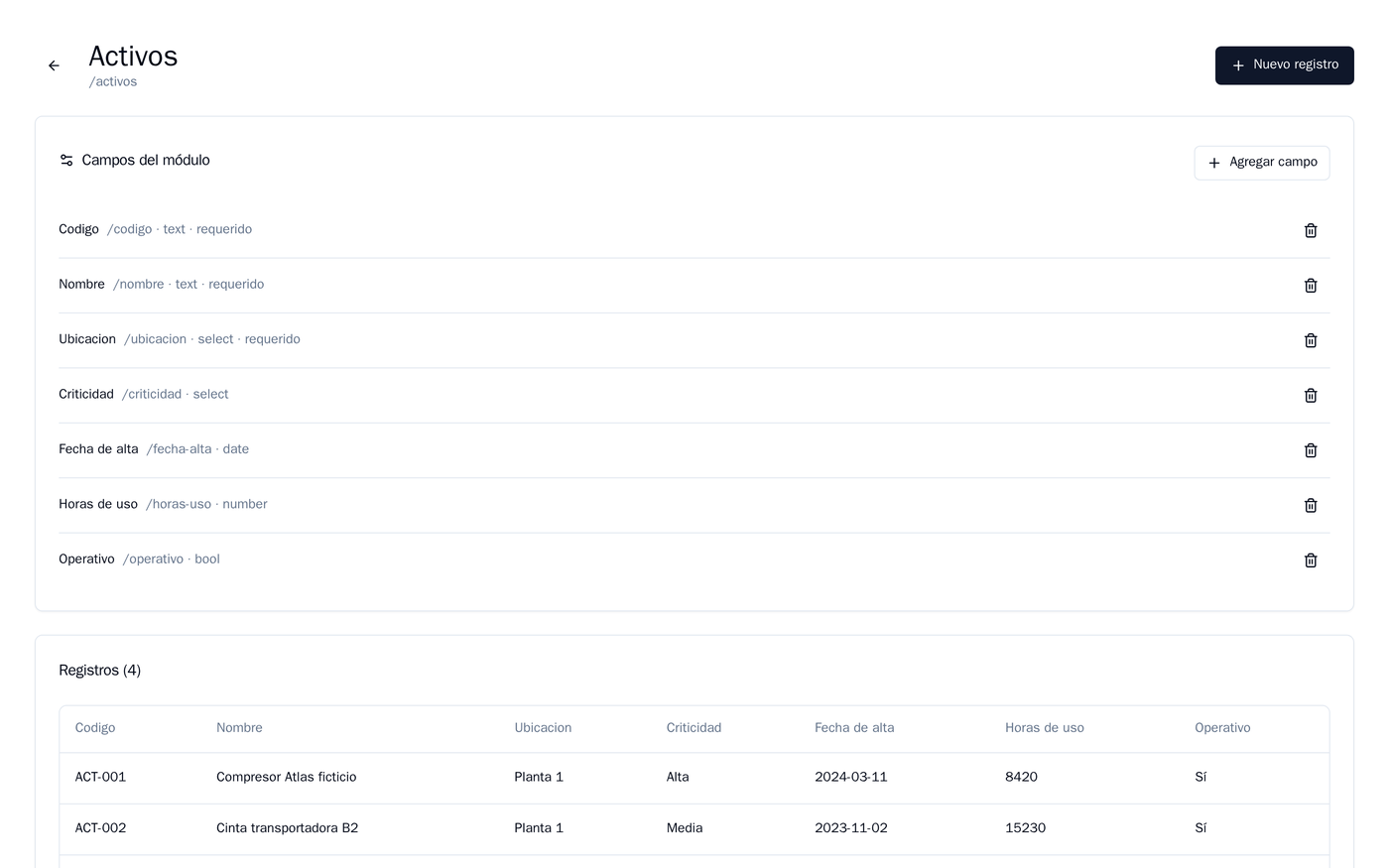
A module is its fields and its records. At the top, the definition: name, key, type and whether it is required. Below, the data already loaded, with one column per field.
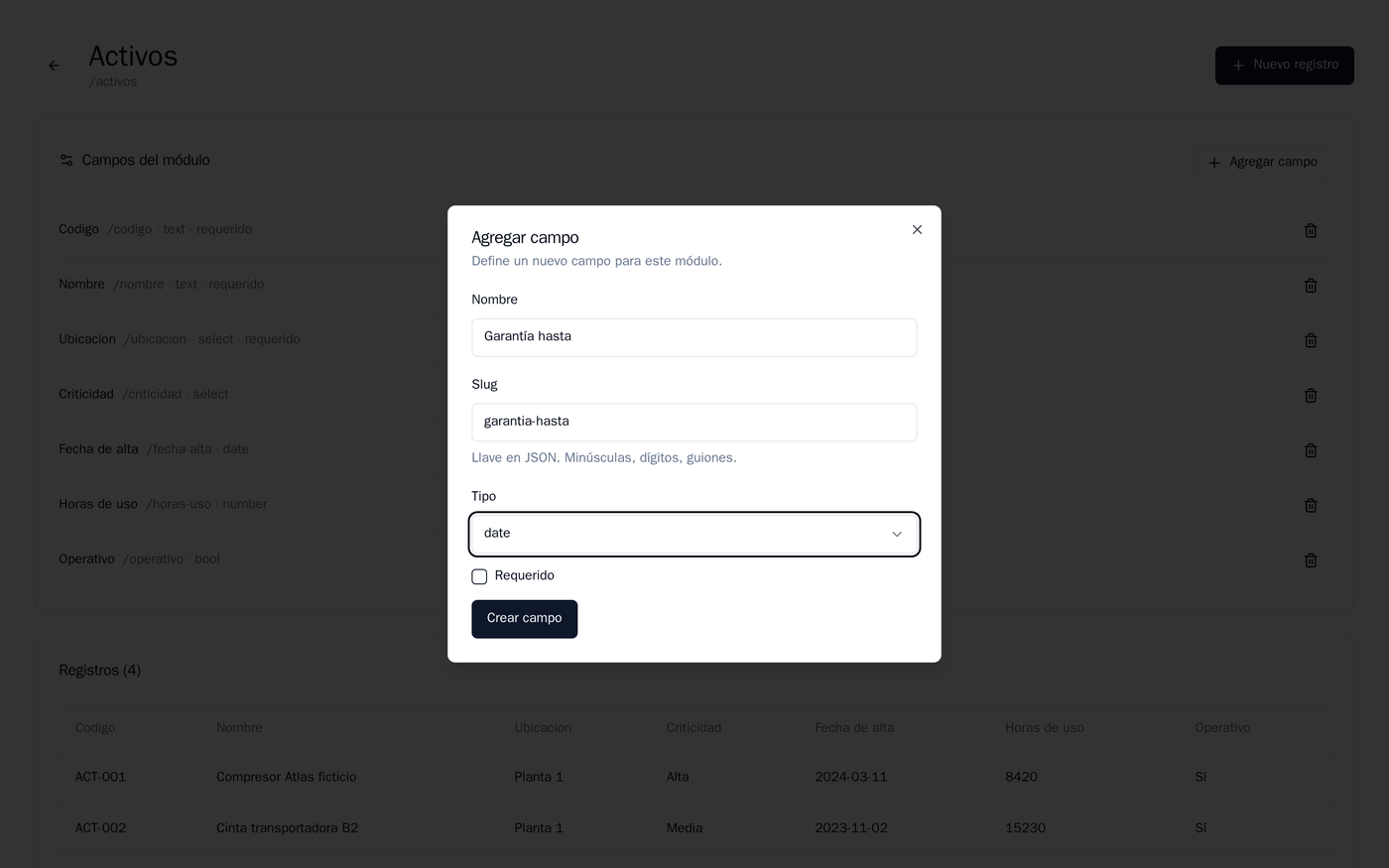
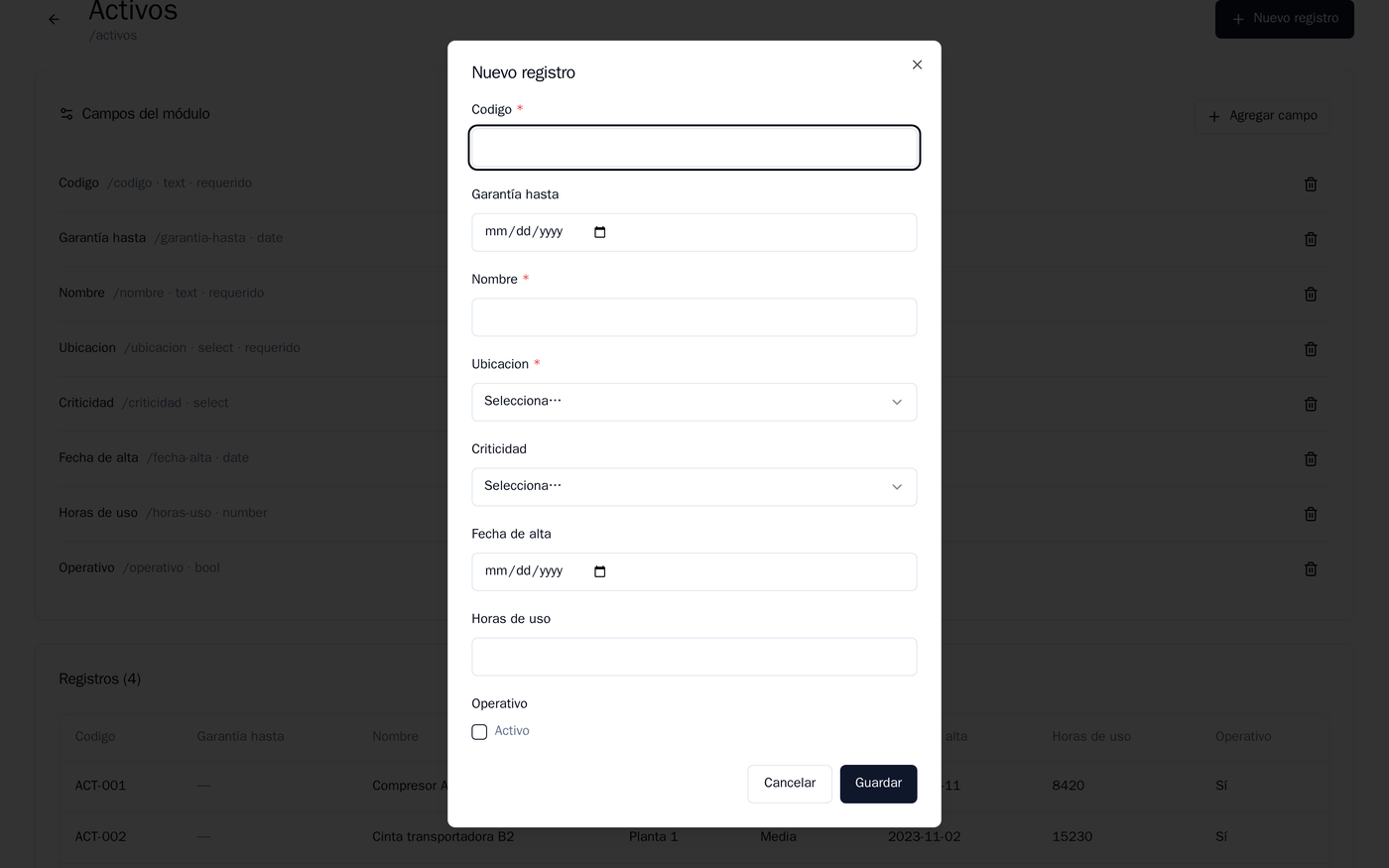
Adding a field means filling in three boxes. No migration, no deploy, not a line of code: the field is saved as a definition, and everything else comes from there.
How it works inside
The idea is old and good: keep the definition apart from the data. Projects, modules
and fields live in ordinary PostgreSQL tables, and the records live in a single table with a
jsonb column and its GIN index. That way a field can be added without touching
the database schema, and the metadata is still queryable like any other table.
What keeps this from turning into a mess is the validator that is built on the fly: a module's field definitions are turned into a validation schema at runtime, and the same rules run in the browser, to warn you while you type, and in the API, which is the one that decides. A number does not get in as text, a date has to look like a date and a dropdown only accepts its own options, without anyone having written that code for that particular field.
Passwords are stored with argon2id, the session is a seven-day JWT, and access is decided by membership in each project with four roles: owner, admin, member and viewer. A viewer who tries to write gets a no from the server, not from the interface.
- strict TypeScript
- Hono
- Drizzle
- PostgreSQL · JSONB
- React 19
- Zod
- pnpm monorepo
Try it yourself
The demo is open and its data is made up. Sign in, open a module, create a field and look at the form: that is the whole product in half a minute.
The demo interface is in Spanish. Open the “Activos” (assets) module and click “Agregar campo” (add field).
- DemoOpen KUIDY-CORE
- Accounts, all with the password Demo1234!
owner@kuidy.demo·admin@kuidy.demo·member@kuidy.demo·viewer@kuidy.demo
What it is and what it is not
It is the engine I use to build custom internal systems without redoing the same work, and that is where its scope comes from: there are still no relations between modules, no reports and no import, and a field's type cannot be changed once it has been created. It is written that way on purpose: I would rather what is there be solid and what is missing be obvious than promise a whole platform and have it fall over in the first demo.
Does your team run its work out of spreadsheets?
That is where this pays off: turning that sheet into a system with permissions, validation and a record of who did what, without waiting three months or paying per seat.
Let's talk →